

Office Plant Hire Pricing In The UK: What It Costs And What’s Included
Summary
Office plant hire pricing in the UK is usually quoted as a monthly fee for a defined scheme and service level. Costs vary because plant quantity, planter specification, access constraints, maintenance visits, and replacement terms all change the time and care needed to keep plants looking right. The best way to compare quotes is to compare what’s included, not just the monthly figure.
Key Takeaways
- Office plant rental cost is driven by plant numbers, planter specification, access, and maintenance frequency,
- A solid office plants hire package includes design, installation, ongoing maintenance, and clear replacement terms,
- Multi site rollouts are easiest to budget when you standardise packages and phase the installation,
TL:DR: What Office Plant Hire Costs And Why It Varies
Office plant hire is typically priced as a single monthly service fee rather than a one off purchase. Design and installation are included at no additional cost, so you are paying one predictable monthly figure that covers the plants, the planters, and the ongoing service that keeps everything healthy and presentable. There is no upfront payment or deposit. The cost is spread over the term of the agreement as a fixed quarterly payment, which means it is treated as an operating expense rather than capital expenditure.
Why pricing varies between quotes usually comes down to four things:
- How many plants are included and what sizes,
- What planter range and finishes are specified,
- How complex the installation and access is,
- How often maintenance visits are needed, and what the replacement terms look like,
If you want to explore the service scope alongside this guide, see office plant hire

What’s Included In A Typical Hire Package
A typical plant rental package is designed to reduce load on facilities management teams and workplace designers, by keeping plant care managed and predictable.
Most hire packages include:
Design
A workplace planting scheme starts with a deep dive into your floorplans, visual references, and the overall look and feel you want to achieve. One of our specialist interior planting designers develops the vision and presents it back to you, often with site surveys along the way to make sure light levels, layout, and usage patterns are properly accounted for.
Installation
Delivery, positioning, and setup are included in every hire package as standard. This covers safe placement and making sure planters are stable, clean, and positioned according to the agreed design. Before installation begins, an environment assessment measures light, humidity, temperature, and air movement to make sure the scheme will perform as intended.
Maintenance Visits
Maintenance begins approximately two weeks after installation, with regular visits on a 3 to 4 weekly cycle across all UK sites. Each visit covers watering, feeding, cleaning foliage, pruning, pest and disease checks, growing medium top up, and making adjustments based on how the space performs. For urgent issues, the aim is to respond within 24 hours. Routine matters are addressed within 2 working days. Detailed reports are issued after every visit so you have a thorough record of the status of your planting scheme.
For more detail on servicing, see plant maintenance
Replacements
Replacement of dead, dying, or overgrown plants is part of our 10 point maintenance SLA. This is included in the hire package, so you are not paying extra when a plant needs swapping out. It is part of maintaining the standard you agreed at the start. Because designs are modular, plants can also be swapped, rearranged, or changed within the contract to suit evolving workspace needs.
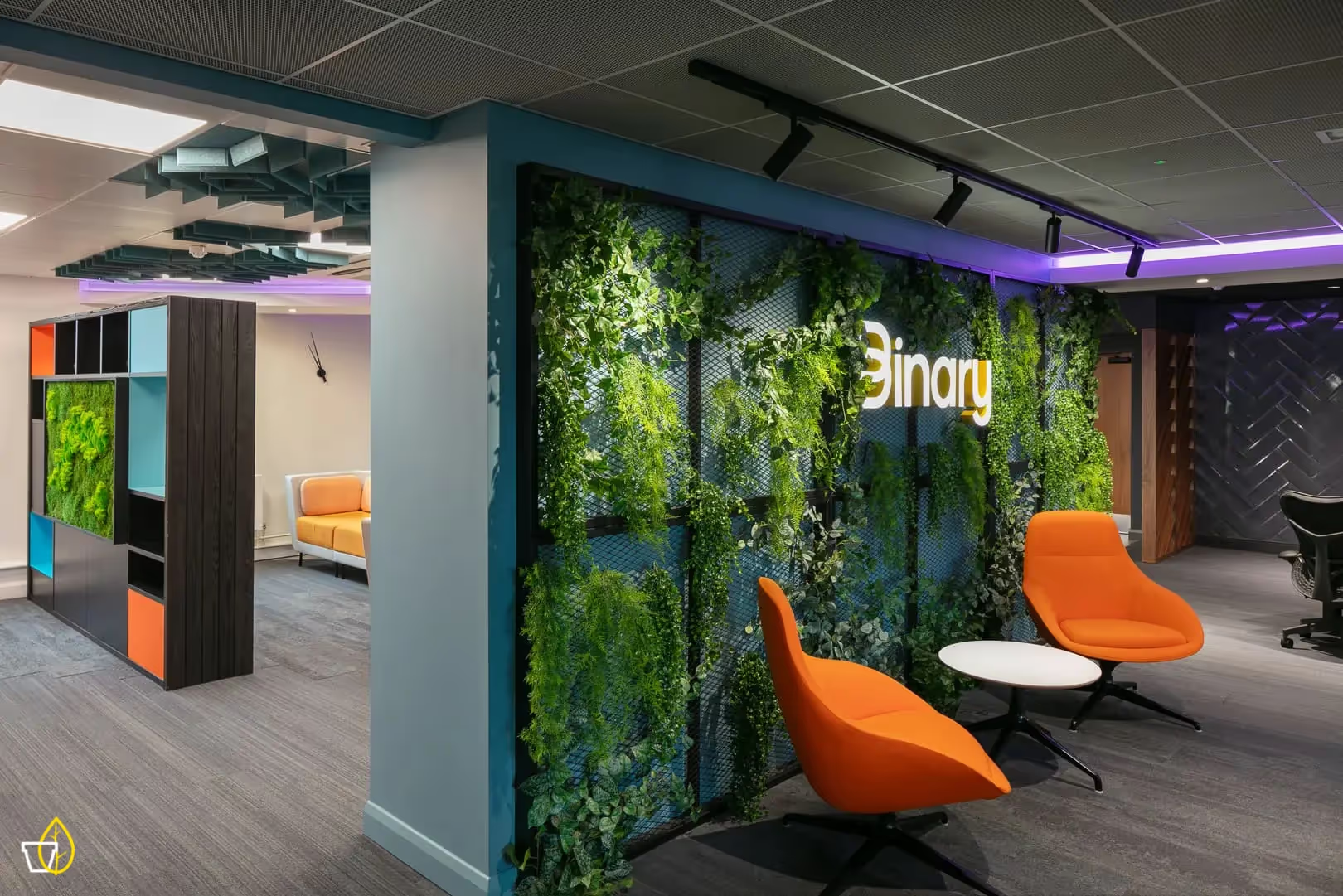
The Main Price Drivers
These are the factors that most commonly affect office plant hire pricing.
Number Of Plants And Plant Size
More plants, and larger plants, increase delivery, handling, and ongoing care time. Larger plants can also require heavier planters and more careful placement.
Planter Specification
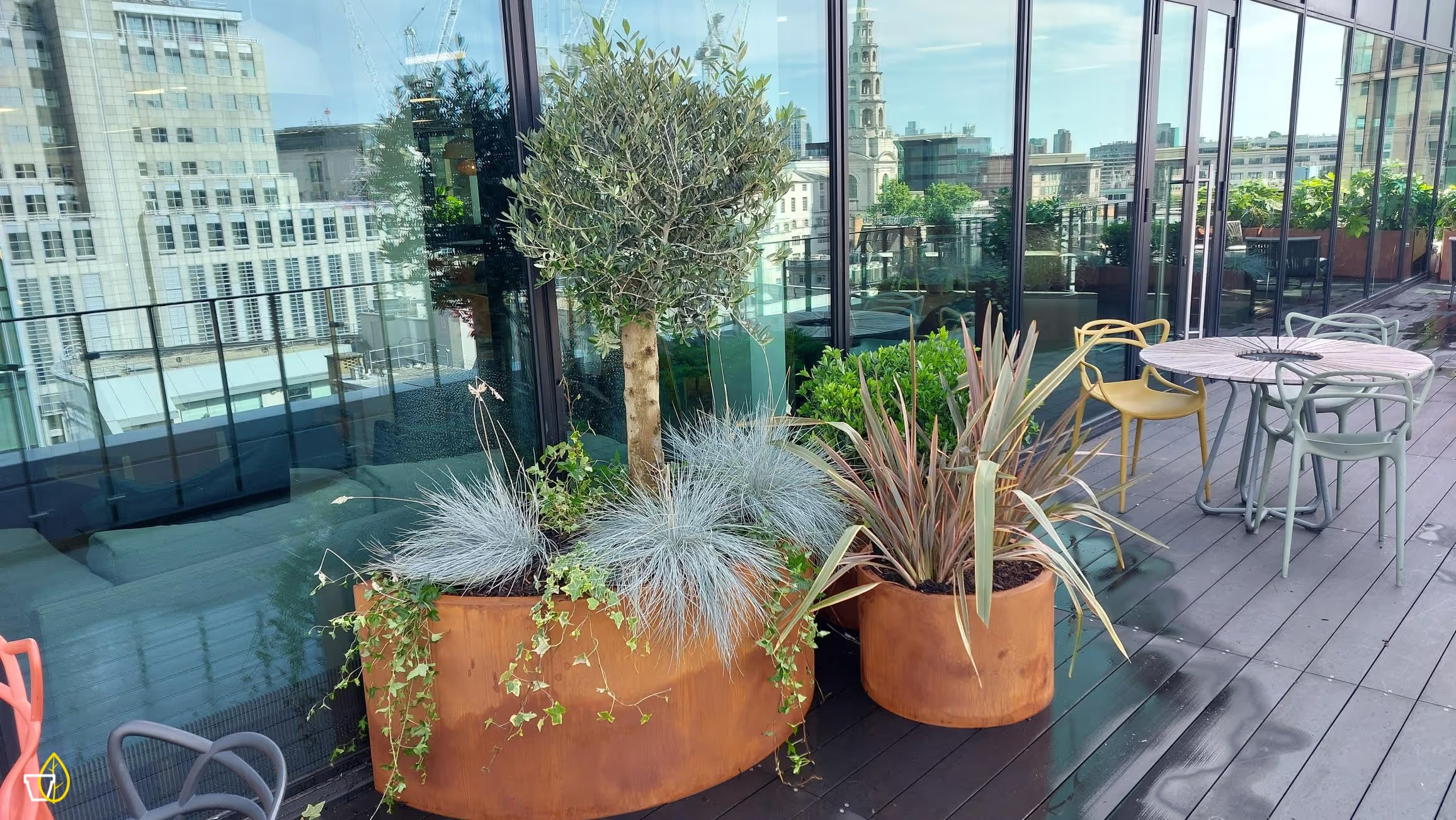
There is a huge range of planters available, from ocean waste plastic and ceramics to natural fiberstone urns. All planters are included in the rental, so the specification you choose affects the monthly cost but there is no separate planter charge. Standard ranges work well across most zones, with premium planters typically reserved for client facing areas or feature points.
Light Levels And Plant Selection
Light levels influence plant selection and maintenance needs. Lower light environments can require more careful positioning, rotation, or different plant choices to maintain quality and reduce replacements. We have a good range of living plants suited to low light areas and can offer consultancy on boost LED lighting where needed. Where living plants are not practical, preserved natural or replica options are available.
Access, Security, And Site Constraints
Access restrictions, limited delivery windows, lift constraints, stairs, and high security sites can add time to installation and maintenance visits, which affects cost.
Maintenance Frequency
We recommend 3 to 4 weekly maintenance across all UK sites. Higher visit frequency can reduce replacements and keep presentation consistent in busy areas. The right frequency depends on plant types, office environment, and the standard you want to maintain.
Number Of Locations
For multi site schemes, travel and coordination can influence price. Budgeting becomes easier when you standardise packages across sites.
How Packages Work
Every scheme is designed around your brief. We have been looking after workspaces since 1977, and rather than choosing from fixed tiers, you work with our design team to build a package that matches your budget, your space, and the look and feel you want to achieve. This consultative approach means you get the right scheme first time, without paying for things you do not need or missing things you do.
As a general guide, schemes tend to fall into three broad levels depending on the scale and complexity of the design:
Smaller Or Focused Schemes
Best for smaller offices or teams getting started with plant rental. Typically covers key touchpoints like reception, meeting rooms, and breakout areas, using standard planters and standard plants with maximum heights of around 1600 to 1800mm. Maintenance follows the same 3 to 4 weekly cycle, and replacement of dead, dying, or overgrown plants is included as part of the maintenance SLA.
Workplace Wide Schemes
Best for businesses that want a consistent look across the whole workplace. These schemes cover more zones with a wider mix of plant sizes for depth and coverage, with upgraded planters in prominent areas. The same maintenance and replacement terms apply.
Flagship And Biophilic Design Led Schemes
Best for flagship spaces where planting is central to the workplace design. These schemes involve a more in depth design process with design workshops, showroom meetings, design revisions, and site surveys. Premium planters and higher specification finishes are typical, with proactive rotation where needed and close coordination with facilities management teams on site.
How To Budget For Multi Site Or Phased Rollouts
Multi site rollouts and phased installations are easier to cost and manage when you standardise the approach and plan ahead.
Phased Installations
Phased installations are common in properties with multiple floors going through a phased refurbishment. The design team creates a complete design for all floors upfront, then plans installations phase by phase, timing each one to align with the refurbishment schedule. Behind the scenes, we work to make sure we have the right details and specifications for each floor before we arrive on site.
National Contracts
We work with companies across the UK, often starting with a few sites and rolling out to 20 or more. A single point of contact holds the design vision and budget expectation, and we design holistically for the company while tailoring to each individual site. Every site is different, and this is where our design team adds the most value, making sure each location works on its own terms while keeping the overall scheme consistent.
Practical Budgeting
A practical way to budget across multiple sites or phases is to:
- Set a consistent planter specification for most areas,
- Define what each package includes by zone type, reception, meeting rooms, open plan, breakout,
- Roll out in phases, starting with the most visible areas,
- Agree maintenance frequency per site based on light levels, footfall, and expectations,
- Ask for a breakdown by site and a combined monthly total, so you can see where cost is concentrated,
Common Mistakes That Increase Costs
These are common causes of unexpected cost increases and inconsistent results.
Over specifying planters everywhere
Premium planters can lift the look, but they are not always needed across every area. Use higher spec planters where they matter most, then standardise elsewhere.
Forcing plants into unsuitable light levels
If plants are placed where light levels are too low, replacements can increase. It is better to select plants based on conditions, and adjust placement early. Where low light makes living plants impractical, preserved natural or replica options can maintain the look without increasing replacement costs.
Under specifying maintenance visits
Lower maintenance frequency can be a false economy if presentation slips and replacements rise. Choose the service level that matches how you want the space to look day to day.
Not planning access properly
Unclear delivery windows, parking, security, or lift access increases time on site and affects installation and ongoing maintenance visits.
Treating each site as a one off
Multi site budgets climb quickly when every location uses different planters, plant mixes, and servicing rules. Standardisation makes costs more predictable.
FAQs
What Is The Minimum Contract For Office Plant Hire
We offer 12, 24, 36 month, or 5 year terms. A minimum term means the design, installation, and ongoing servicing model is sustainable. After the initial term, the contract can be cancelled with three months notice. The key is to choose the term that matches your lease cycle or workplace planning horizon.
How Often Are Maintenance Visits
We recommend 3 to 4 weekly maintenance visits across all UK sites. This keeps presentation consistent and reduces the need for replacements.
Are Replacements Included
Replacement of dead, dying, or overgrown plants is included as part of our 10 point maintenance SLA. This is standard across all packages.
Can You Support Low Light Areas
Yes. We have a good range of living plants suited to low light environments and can offer consultancy on boost LED lighting to improve conditions. Where living plants are not practical, preserved natural or replica options provide the same visual impact without ongoing replacement risk.
Do Plants Need Seasonal Changes
Most indoor schemes are designed for year round consistency. Ongoing maintenance visits include adjustments and replacements as needed, so the scheme maintains its standard without requiring seasonal overhauls.
How Do Quotes Work
The process starts with a design exploration meeting to clarify your workplace objectives and planting ambitions. From there, you receive a detailed proposed planting scheme with a priced proposal, installation timeline, and the chance to handpick the specific plants you want. An environment assessment measures light, humidity, temperature, and air movement to make sure the scheme will last. To get started, share your floorplans, site address, move date, and a visual pack showing the look and feel you are after.
What Is The Typical Lead Time
For non bespoke schemes, typical lead time is 3 to 4 weeks. Bespoke designs, specialist planters, or large multi site rollouts may take longer depending on specification and scheduling.
What Do We Need To Provide
To get started, we need your floorplans, site address, move date, and a visual pack showing the look and feel you are after. If you have specifics around budget, sustainability requirements, joinery item dimensions, or special design features, sharing these upfront helps us get the design right first time.
Ready To Get A Tailored Quote
If you want a package that fits your workplace, your planters, and your servicing expectations, the next step is to book a free design consultation
Book a free design consultation to get a tailored quote.


.svg)


.svg)
.svg)