

.webp)
Enhanced planting substrates for enduring plant performance
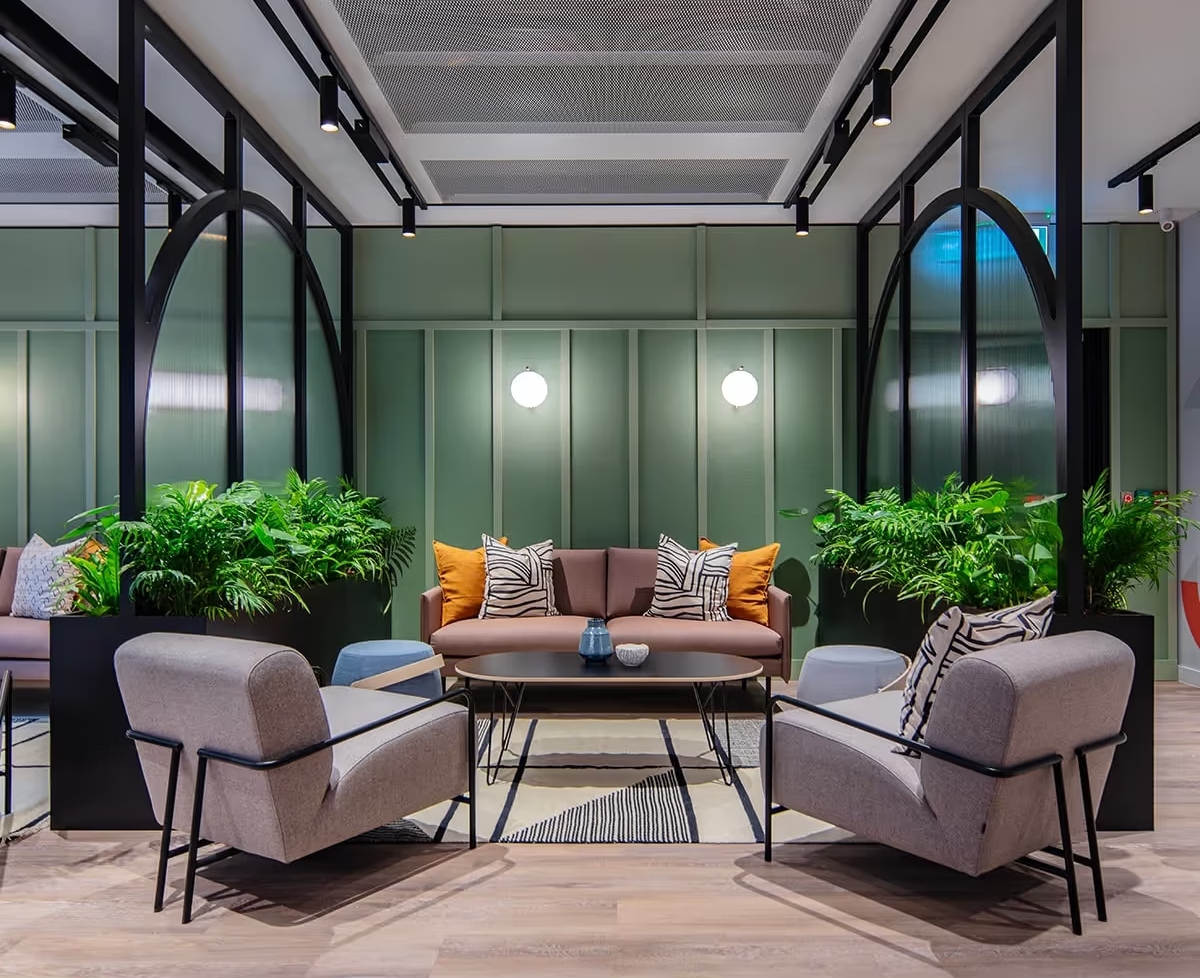
The benefits of workplace biophilia are well documented, and it’s unsurprising that more and more organisations are integrating planting design into their working environment. As well as supporting physical and mental wellbeing, planting can help to improve air quality, enhance acoustics, and turn the office into a more appealing destination. While planting design can completely transform a space, the planting system that supports that design is equally important. When the right system is chosen, a scheme can maintain its good looks for years with only light-touch maintenance, making it a strong investment in people and place.
What makes planting succeed long term in an office space?
Long-term plant health and resilience depend on a stable balance of water, oxygen, light, and nutrients. This can be challenging in an office environment where it’s common to have inconsistent light levels, fluctuating temperatures, air conditioning draughts, and low humidity. Fortunately, there are a number of ways to mitigate these issues:
Choosing the right plant for the right place
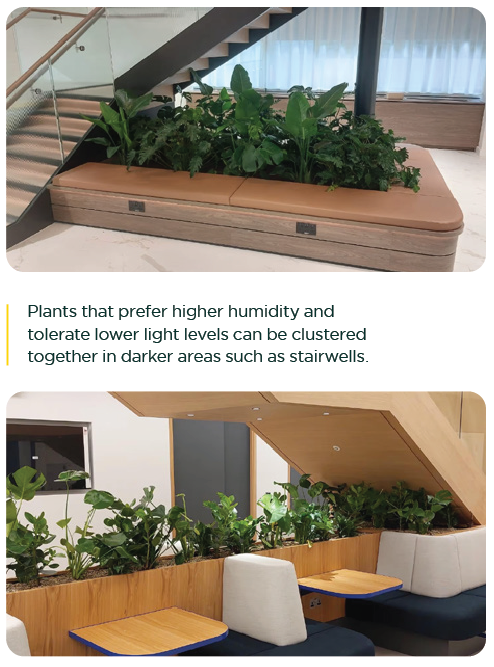
Every plant has unique needs and it’s essential to play to each species’ strengths. This might mean grouping humidity-loving plants that can tolerate lower levels of light in a shady stairwell, or placing large, light loving specimens beside a window seat.
Ensuring ongoing maintenance is efficient
A planting system should always be designed with ongoing maintenance in mind. Regular, efficient servicing from an expert team keeps planting in excellent condition whilst controlling long-term costs.
Limiting plant pests and disease
Setting up optimum planting systems from the outset – and maintaining them well – significantly reduces the risk of pests and disease.
Balancing water, oxygen and nutrients
It’s easy to under- or overwater plants, and it’s the same with nutrients. Selecting the right planting system removes the guesswork, ensuring plants receive exactly what they need to thrive.
Selecting the correct planting system
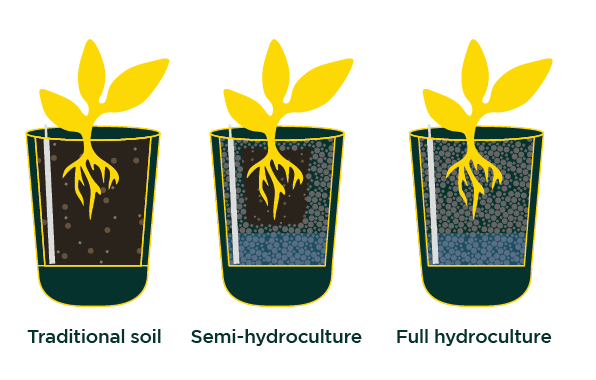
Choosing the right planting system is critical for the long-term health and resilience of any scheme. Below are the three main approaches:
Traditional soil
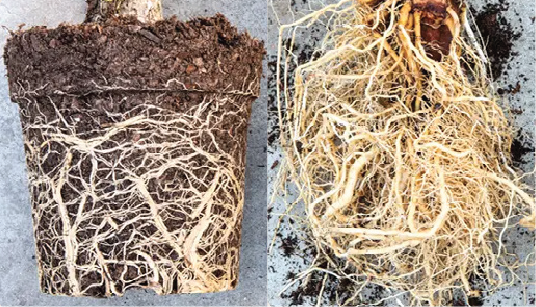
Soil is the familiar potting medium that many people would use at home. It contains nutrients and holds moisture temporarily, which plants draw up via their roots. While soil is inexpensive and intuitive, it comes with some limitations:
Watering inconsistency – Different plants require different watering frequencies, making efficient maintenance difficult, especially in dry, air-conditioned environments.
Compaction over time – Compacted soil reduces oxygen availability to the roots, leading to hypoxia.
Higher risk of pests – Soil can attract unwelcome fungus gnats.
Mess and disruption – Soil needs periodic refreshing, which is more labour-intense, and can get a bit messy.
Environmental concerns – Some composts contain peat, the extraction of which damages carbon-rich peatlands, and releases greenhouse gases.
Semi-hydroculture and Full hydroculture
Low-soil and soil-free planting systems are increasingly popular in office spaces because of the wide range of benefits they offer. Semi-hydroculture uses a reduced amount of soil alongside an inert growing medium, while Hydroculture is completely soil-free, with both systems delivering water and nutrients in a more controlled way than traditional soil planting. The advantages include:
+ Cleaner and more suitable for office environments
+ Fewer flying pests
+ More consistent moisture levels between maintenance visits
+ Longer intervals between watering
+ Improved water efficiency (the water is used more effectively by the plant)
+ No compaction or oxygen deprivation
+ Long-lasting growing media that rarely needs replacing
Although installation costs are higher than traditional soil systems, hydro and semi-hydro systems offer streamlined maintenance, healthier plants and greater longevity. As sustainability becomes a greater priority, more projects are specifying systems with integrated irrigation and moisture monitoring to reduce plant replacement rates – an approach particularly well suited to hydro and semi-hydro planting.
The difference between hydroculture and semi-hydroculture
The main distinction lies in how plant roots access water:
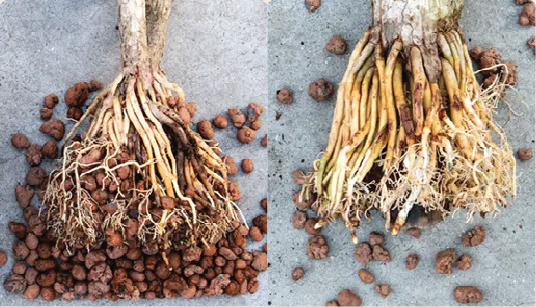
Full hydroculture is completely soil-free, with roots growing in or directly above a nutrient-rich water reservoir.
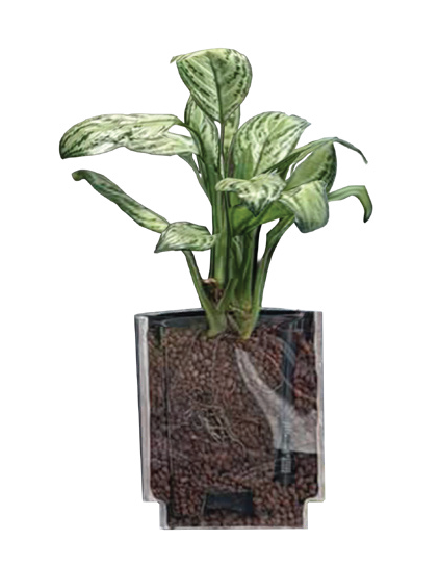
Semi-hydroculture combines a reduced amount of soil with an inert medium, such as LECA or Vulka. The medium stores and gradually releases water to the roots while helping to maintain aeration and a stable pH, supporting healthy growth and resilience.
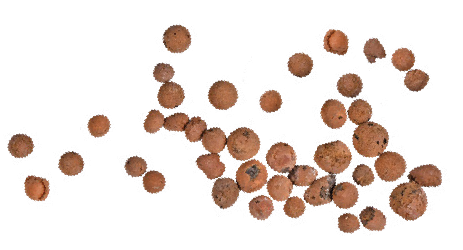
LECA – (Lightweight Expanded Clay Aggregate) Baked clay pellets that expand into porous, lightweight balls.
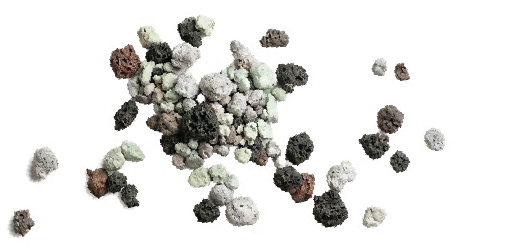
Vulka – A high-quality mineral substrate made of volcanic rock, pumice and zeolite. Zeolites act as ion exchangers, storing and slowly releasing nutrients to the plant as needed.
Full hydro systems can work well for engineered, large-scale installations such as green walls, but they require more complex set-up and ongoing fine-tuning. They also favour moisture-tolerant species, limiting plant choice. For most office scenarios, semi-hydro systems offer the best balance. They support individual specimens, modular groupings and mixed schemes without the complexity of full hydro.
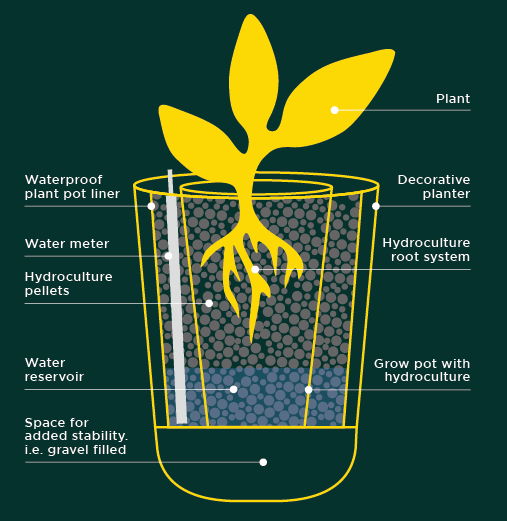
Planting systems at a glance
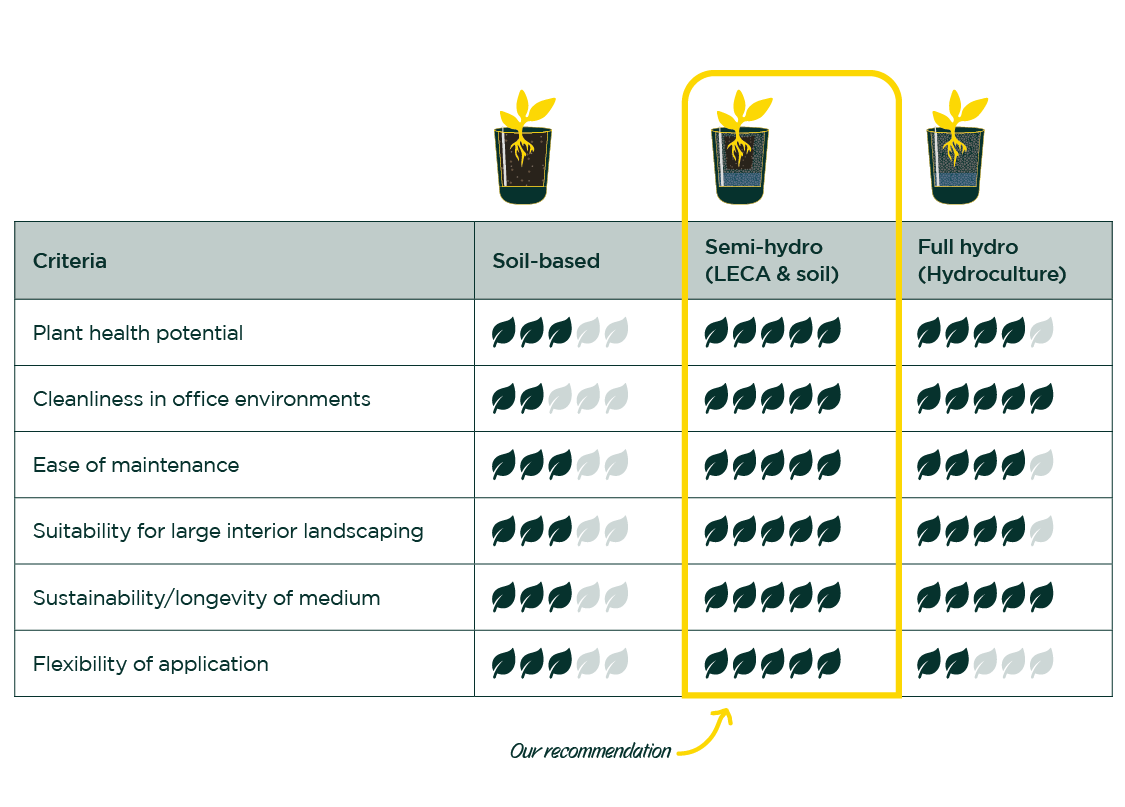
Semi-hydro systems are the clear winner for offices
At Vantage Spaces, our focus is always on creating inspiring workspaces where the power of plants delivers long-lasting impact. The benefits of hydro planting systems (particularly semi-hydro) are clear, especially when considering long-term plant performance, sustainability and maintenance efficiency. Our own semi-hydro system, EnviroLeaf, has been refined over many years of design and installation. We believe it offers clients the ideal balance of beautiful biophilic design, resilience and operational efficiency. If plants could vote, they’d probably vote for EnviroLeaf!
_____________________________________________
If you’d like to talk to one of our experts about the benefits of our EnviroLeaf system, please get in touch.
.webp)
.webp)
.webp)


.svg)
.svg)